A blocked drain is not one problem. It’s a category of problems — and the difference between the cheap one and the expensive one is something you can usually spot yourself, before anyone picks up a tool.
The single most useful question is not “which drain is blocked?” It’s “how many drains are affected?” That one answer narrows it down faster than anything else you can do.
Start here — how many drains are affected?
If one fixture is slow, the blockage is almost always local to that fixture. If several fixtures are slow, the problem has moved further down the system. If everything in the house is backing up, it’s the main line, and that one needs a plumber rather than a plunger.
Work through it in that order. It costs you nothing and it tells you whether you’re dealing with a Saturday-morning job or a phone call.
One fixture is slow — what that usually means
A single slow sink, tub, or shower is a local blockage — close to the fixture rather than deep in the system.
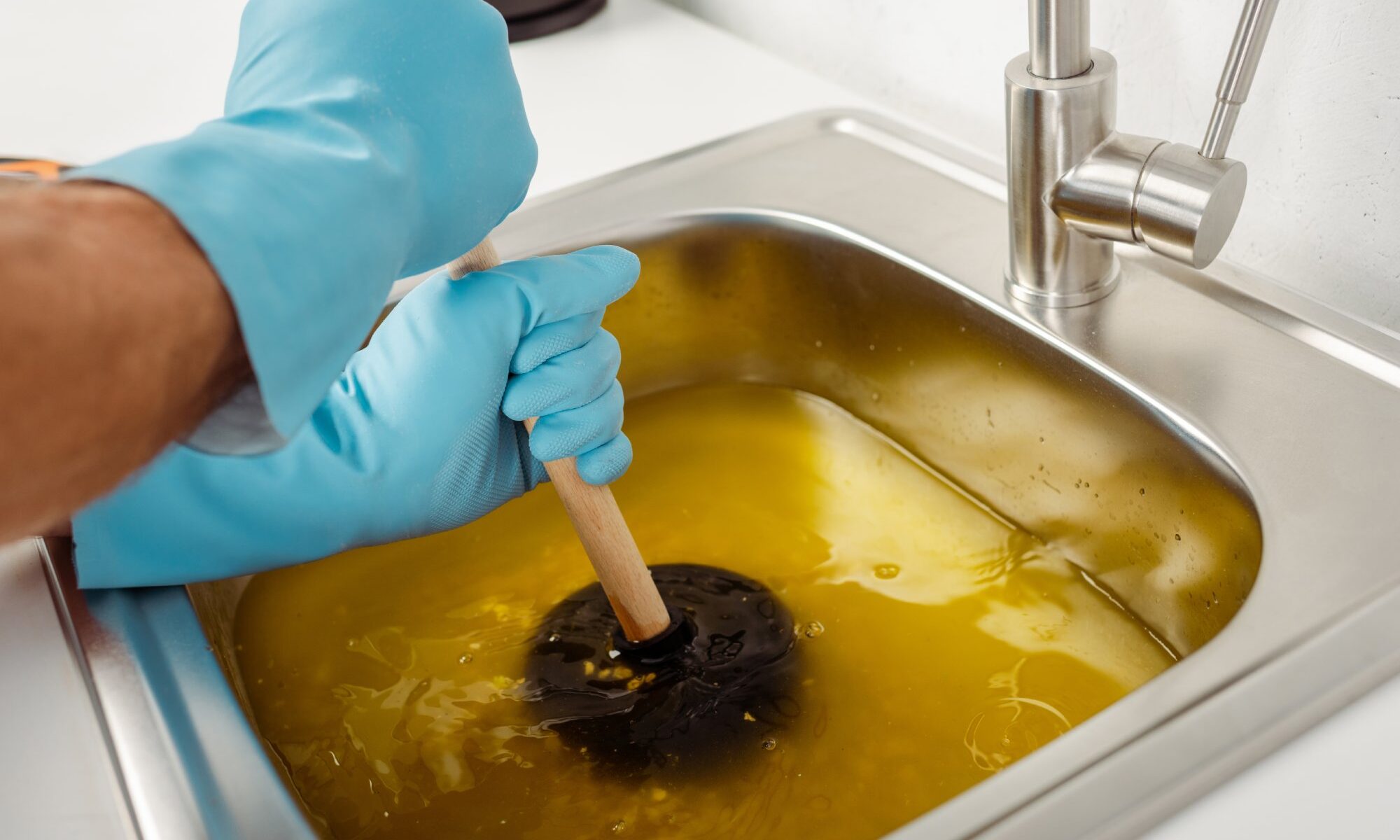
In a bathroom that usually means hair combined with soap residue, building up on the stopper mechanism and the P-trap below it. In a kitchen sink it’s cooking fat — which pours as a liquid and sets as a solid on the inside of the pipe, catching everything that comes after it.
Local blockages are the good news scenario. They’re contained, they don’t indicate anything about the rest of your plumbing, and they’re often clearable without opening anything up. The picture changes as soon as a second fixture joins in.
Two or more fixtures are slow — what that usually means
That second fixture is the tell: the blockage has moved past the individual traps and into shared pipework.
The pattern worth paying attention to is which fixtures. If the bathroom sink and the tub are both slow but the kitchen is fine, the problem is in the branch line those two share. If the lowest fixtures in the house go first — a basement shower, a downstairs toilet, a floor drain — that’s gravity telling you the blockage is further down still.
This is the point where DIY starts to have diminishing returns. Clearing a shared branch line properly means reaching past where a plunger or a hand auger will get you.
Every drain is backing up — stop and call
When every drain in the house is slow or backing up at once, the blockage is in the main line, and continuing to run water makes it worse. There is no version of this that gets better on its own.
The tell-tale signs, beyond the obvious:
- Flushing a toilet makes water rise in a nearby tub or shower
- Running the washing machine causes a floor drain or the lowest toilet to overflow
- Sewage smell inside the house
- Water appearing where no fixture is running
At that point, stop using water in the house and get someone out. A main-line blockage is one of the situations that genuinely warrants an emergency plumbing call rather than an appointment next week — because every additional litre has to go somewhere, and it will find the lowest opening in your house.
Main line work is a different toolkit: hand auger and drain snake for most blockages, hydro jetting where the line needs scouring rather than punching through, and a camera where it’s worth seeing what’s actually down there before anyone commits to a repair. That’s the difference between a line that’s been opened and a line that’s actually clear.
One distinction worth making before you call: everything above is about water that can’t get out of the house. If your problem is water getting in — a wet crawlspace, or a soggy patch against the foundation after heavy rain — that’s perimeter drains, weeping tile, and sump pumps, and it’s a different job with a different fix.
The sounds and smells that change the diagnosis
Gurgling. A drain that gurgles — or a toilet that bubbles when a nearby sink empties — is air being pulled through the water in the trap because it can’t get through the vent. That points at a venting issue or a partial blockage downstream, not at the fixture that’s making the noise. It’s worth investigating even if everything is still draining.
Sewage smell with normal drainage. If drains are running fine but there’s a smell, the likely cause is a dry trap — a floor drain or guest bathroom that hasn’t been used in months, letting the water seal evaporate. Run water into it and see if the smell goes. If the smell persists in a fixture you use daily, that’s a different problem and worth a call.
Recurring clogs in the same fixture. A drain that blocks, clears, and blocks again on the same schedule isn’t really clearing. Something further down is catching material, and each “fix” is punching a hole through it rather than removing it.
Safe first steps for a single slow drain
For one slow fixture, before anything else: pull and clean the stopper, and try a plunger with enough water in the basin to cover the cup.
Beyond that, be deliberate about what you put down there. We already have a full post on this — the truth about chemical drain cleaners and whether they’re safe for your pipes — and the short version is that the convenient option is often the one that costs you a pipe. Worth two minutes before you reach under the sink.
One thing worth mentioning when you call: if a chemical cleaner has already gone down and hasn’t worked, say so. It changes how the drain gets opened up safely.
What actually goes down Comox Valley drains
This is the part most drain advice skips, and locally it matters more than the plunger technique.
The Comox Valley Regional District is direct about it: “Only flush human waste and toilet paper.” Everything else on the list they publish — “wipes, facial tissues, diapers, cotton balls, feminine hygiene products, dental floss, paper towels, syringes, and even hair” — is material that doesn’t break down and instead “become stringy and bind together to block pipes.”
Wipes are the specific one worth internalising, because the packaging actively misleads people. Per the CVRD: “Unlike toilet paper, wipes don’t easily break down when flushed, even the ones labelled flushable.” And more pointedly: “Currently in Canada there are no regulations for the word flushable, so you should not flush anything other than human waste and toilet paper.”
That word has no legal meaning in this country. The wipes are not flushable. They’re just sold that way.
Add cooking fat to that list — same mechanism, and it’s why a kitchen drain that slows down on a schedule usually isn’t a coincidence.
Quick reference — reading your symptoms
| What you’re seeing | Most likely cause | What to do |
|---|---|---|
| One sink or tub draining slowly | Hair, soap, or fat in the trap | Clean the stopper, try a plunger |
| One fixture blocking repeatedly | Partial blockage further down the branch | Book a drain cleaning — it isn’t clearing properly |
| Two fixtures in one room slow | Blockage in the shared branch line | Call — past plunger range |
| Lowest fixtures in the house go first | Blockage further down toward the main | Call, reduce water use |
| Every drain slow or backing up | Main line blockage | Stop using water, call now |
| Toilet flush raises water in the tub | Main line blockage | Stop using water, call now |
| Gurgling drain or bubbling toilet | Venting issue or partial downstream blockage | Book an inspection — don’t wait for a full block |
| Sewage smell, drains running fine | Dry trap in an unused fixture | Run water into it; call if it persists |
| Sewage smell with slow drains | Main line issue | Call now |
When it’s urgent and when it can wait
One slow bathroom sink can wait for an appointment. A main-line backup cannot, and neither can anything producing sewage inside the house.
We take calls seven days a week, 8am to 6pm, and same-day service is available across Courtenay, Comox, Cumberland, Royston, Union Bay, Fanny Bay, Merville, Black Creek, and Campbell River.
Don’t see your area listed above? Call and ask — chances are we’ll still cover you.
Blocked Drain FAQ
Who should I call for a clogged sink or drain in Courtenay?
A licensed plumber. For a single slow fixture it’s straightforward drain cleaning; for repeat blockages or a main-line backup you want someone with an auger, a drain snake, hydro jetting, and a camera, so the line gets properly cleared rather than temporarily opened. Siegfried Plumbing & Gas covers Courtenay and the Comox Valley to Campbell River — call 250-207-5488.
Why are all my drains slow at the same time?
Because the blockage is in the main line that all of them feed into, rather than in any individual fixture. Stop running water in the house and call — continuing to use water pushes more volume against the blockage.
Is a gurgling drain serious?
It’s worth investigating. Gurgling means air is being drawn through the trap, which usually points at a venting problem or a partial blockage downstream. It often shows up before a full blockage does, which makes it a useful early warning worth acting on rather than waiting out.
Are flushable wipes actually flushable?
No. As the Comox Valley Regional District puts it, “Currently in Canada there are no regulations for the word flushable” — and wipes don’t break down like toilet paper even when the packaging says they do. Only human waste and toilet paper should be flushed.
Do you charge to come and look at a blocked drain?
Estimates are free, and you get clear pricing before the job starts — no surprises on the invoice.
If you’ve read the table above and landed in the “call now” row, don’t wait it out. And if you’re in the “one slow sink” row, it’s still worth getting it cleared properly before it becomes the other kind. Either way, tell us which row you’re in when you call — it points the visit in the right direction before anyone arrives.
Licensed, insured, and WorkSafeBC covered. All work completed to BC Plumbing Code. Free estimates, with clear pricing before the job starts.